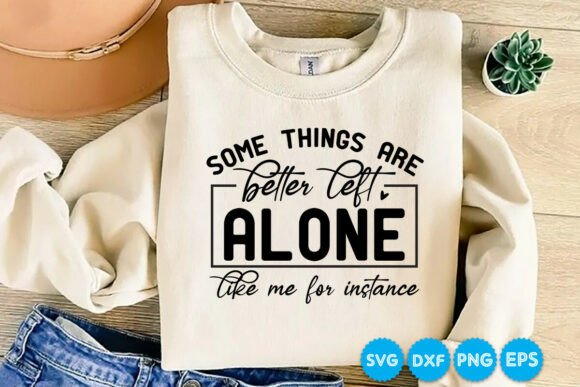
Review: Some Things Are Better Left Alone Design
As a designer who spends more time hooped up at the machine than I do away from it, I approach every new machine embroidery design with a healthy dose of skepticism. We have all seen those files that look fantastic on a screen but turn into a puckered mess once the needle hits the fabric. That is why I took a close look at the Some Things Are Better Left Alone Design before committing it to a client project. This isn't just about whether the artwork is cute; it is about whether it holds up under the tension of a hoop and the scrutiny of a paying customer.
My first impression of this graphic was its bold, slightly rebellious personality. The phrase itself carries a weight that demands attention, making it an excellent candidate for custom apparel that needs to stand out in a crowded market. Visually, the layout feels balanced, avoiding the common pitfall of overcrowded text that often plagues typography-heavy T-Shirt Designs. When I loaded the vector files to inspect the paths, the lines were clean, suggesting that the transition from digital art to physical stitch should be smooth. For those of us running a craft business, that initial file quality is the difference between a quick production run and hours of troubleshooting.
Real-World Application: The Tote Bag Test
To truly evaluate this embroidery file, I needed a real-world scenario. I decided to test it on a heavy canvas tote bag design intended for a local boutique. Canvas is unforgiving; if the density is too high, the fabric warps. If it is too low, the background shows through. I envisioned this specific graphic working perfectly here because the sentiment fits the eco-friendly, no-nonsense vibe of reusable bags.
I started by preparing my workspace. Since the product description confirms we receive an SVG, DXF, PNG, and EPS, I had the flexibility to manipulate the size without losing resolution. I imported the SVG into my digitizing software to check the stitch simulation. The design naturally lends itself to a mix of fill stitch for the heavier elements and perhaps a crisp satin stitch for the outlines, depending on how you choose to finalize the digitization for your specific machine. One thing I appreciated immediately was the clarity of the shapes. There were no tiny, isolated islands of color that would require excessive trimming or risk unraveling after a wash.
Once stitched, the result was striking. The text remained legible even from a distance, which is crucial for a handmade product meant to be worn or carried in public. The mood of the piece is humorous yet serious, a combination that resonates well with modern consumers looking for personalized gifts with attitude. It transforms a simple bag into a statement piece, adding perceived value to the finished product.
Versatility Across Fabrics and Projects
Beyond tote bags, I can see this design thriving on a variety of substrates. Imagine this on a sweatshirt embroidery project for a college student or a cozy holiday embroidery gift for a cynical friend. The graphic nature of the art means it scales well. However, context matters. While it works beautifully on flat surfaces like pillow covers or aprons, one must be cautious with curved surfaces like caps. The rigidity of the text layout might require careful positioning to avoid distortion on the front panel of a hat.
For Etsy sellers and small shop product creators, versatility is key. This design could easily be adapted for baby embroidery if scaled down and softened with pastel thread colors, though the message might be better suited for adult custom apparel. It also serves as a strong asset for creating printable mockups. Because the included PNG is high resolution at 300 dpi with a transparent background, you can instantly generate professional-looking previews for your online store without needing to stitch a sample first. This saves time and allows you to test market reaction before committing thread and fabric.
Critical Considerations for Stitching Success
While the design is robust, there are areas where a professional eye needs to be sharp. If you are planning to use this on thin fabric or stretchy knits, your choice of stabilizer will make or break the project. The density of the letters, if not managed well, can cause puckering. I strongly advise testing the design on scrap fabric first. Do not skip this step. What looks good on a stiff denim swatch might behave differently on a soft tri-blend tee.
Pay close attention to thread colors. High contrast is essential here. Using a dark thread on a dark fabric will render the message invisible, defeating the purpose of the graphic. Conversely, using a metallic thread could add a nice touch of luxury, turning a standard Graphics file into a premium embroidered patch aesthetic. Also, consider the hoop size. Ensure your frame is large enough to accommodate the design without needing to re-hoop, which can lead to alignment issues.
Another factor is the stitch density. Since the provided files include vector formats (SVG, EPS, DXF), you likely have the freedom to adjust the density if you are re-digitizing or editing the stitch properties in your software. If you are using a pre-digitized version, inspect the small details. Are the corners sharp? Is the spacing between letters sufficient to prevent thread bridging? These are the details that separate amateur work from professional commercial embroidery.
Building Brand Trust and Value
Ultimately, using a design like Some Things Are Better Left Alone is about more than just filling space on a garment. It is about curating a brand identity. When customers see a clean, well-executed design, it builds trust. They perceive the handmade presentation as high-quality and thoughtful. In contrast, a poorly executed version of this same design—with skipped stitches or misaligned text—can damage your reputation as a maker.
This design offers a unique opportunity to engage buyers who appreciate wit and honesty. It stands out among the sea of generic "Live Laugh Love" motifs. By choosing a design with character, you signal to your audience that your design assets are curated with care. Whether you are selling the finished tote bag, a custom sweatshirt, or even licensing the design for others to use, the visual appeal drives engagement.
Before you dive in, remember to verify the licensing terms associated with these files. The package includes editable vectors, which is fantastic for customization, but always confirm whether the license allows for unlimited commercial sales or if there are restrictions on the number of physical items you can produce. Additionally, since exact stitch counts and specific machine compatibility are not detailed in the file list, it is your responsibility to ensure the design matches your machine's capabilities and your project's requirements.
In conclusion, the Some Things Are Better Left Alone Design is a solid contender for your next embroidery project. It balances humor with style, offering a versatile solution for various T-Shirt Designs and home decor items. With proper preparation, the right stabilizer, and a keen eye for detail, this graphic can elevate your portfolio and delight your customers. It is a reminder that sometimes, the best designs are the ones that speak their mind clearly and boldly.