Review: One Month Can't Hold Our History Black
As a designer who spends more time staring at stitch simulations than I do at my own family photos, I approach every new machine embroidery design with a healthy dose of skepticism. We have all been there: you download a file that looks crisp on the screen, only to watch your machine struggle with tiny details or dense fills that turn into a bird's nest on the actual garment. That is why I took a close look at One Month Can't Hold Our History Black before committing it to any client projects. This isn't just about aesthetics; it is about whether this Illustrations and Graphics asset can survive the rigors of real-world production while honoring the weight of its message.
The Visual Impact and Mood
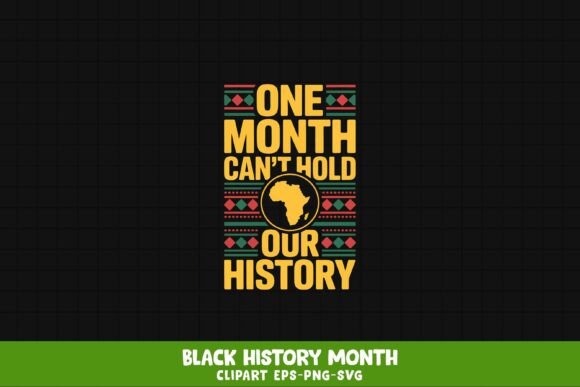
The first thing that strikes me about this design is its boldness. The phrase "One Month Can't Hold Our History" is not a whisper; it is a declaration. When viewing the source files, the Afrocentric typography carries a distinct personality. It feels grounded and strong, which is exactly what you want when creating pieces for Black History Month. The layout suggests a design that relies heavily on clean lines and solid shapes rather than overly intricate shading. For an embroiderer, this is often a good sign. Complex gradients in digital art rarely translate well to thread, but strong typographic statements usually sing when rendered in satin or fill stitches.
The mood here is one of pride and permanence. It moves beyond the typical celebratory clichés and touches on something deeper regarding legacy and time. Visually, the design demands space. It does not feel like something meant to be shrunk down into a tiny pocket logo. It belongs on the chest of a heavyweight sweatshirt, the back of a denim jacket, or centered on a canvas tote bag where the text can breathe and be read easily from a distance.
Real-World Application Scenarios
To truly test the viability of this embroidery file, I imagined a specific scenario: a local boutique owner preparing for February inventory. She needs a standout piece that appeals to customers looking for meaningful, wearable art rather than fast fashion. I pictured this design stitched onto a high-quality, charcoal grey French terry sweatshirt. The contrast between the black thread (or perhaps a deep navy or rich gold, depending on the desired effect) against the dark fabric would require careful thread selection, but the result would be sophisticated and understated.
Alternatively, consider a white canvas tote bag design. Here, the stark black lettering would pop aggressively, making it a perfect statement piece for grocery runs, library visits, or community events. Because the message is educational and empowering, it also fits beautifully in educational settings. Imagine these stitched onto aprons for a school history project or onto pillow covers for a community center library nook. The versatility lies in the simplicity of the message; it works as custom apparel, home decor, or even as part of a larger handmade product line for an Etsy seller focusing on social justice themes.
Technical Considerations for Stitching
However, enthusiasm must be tempered with technical reality. When dealing with typography-heavy designs, the devil is always in the details. Before loading this onto your machine, you need to assess the stitch density. If the letters are too narrow, a standard satin stitch might become bulky and cause the fabric to pucker, especially on stretchy materials like t-shirts. If the design utilizes a fill stitch, you must ensure the underlay is sufficient to prevent the fabric from showing through, particularly if you are stitching on dark fabrics with black thread.
There are specific situations where you should proceed with caution. If you are attempting to place this on a curved surface like a cap, the long horizontal nature of the text could distort unless you have significant experience with cap framing and pull compensation. Similarly, be wary of using this on thin, lightweight fabrics without a robust stabilizer. The weight of the thread required to make the text legible could weigh down a flimsy tee, causing it to hang awkwardly. For items that will see frequent washing, like kitchen towels or baby clothes, ensure that the tie-offs are secure and that the stitch count isn't so high that it creates a stiff, uncomfortable patch on the skin.
Enhancing Brand Value and Customer Trust
Using a design like One Month Can't Hold Our History Black correctly can significantly elevate your brand perception. Customers today are savvy; they can tell the difference between a cheap, mass-printed transfer and a thoughtfully embroidered item. The texture of thread adds a tactile dimension of quality that ink cannot match. When a customer sees clean, sharp lettering with no loose jumps or bird nests, it signals professionalism. It tells them that the creator cares about the craft, which in turn builds trust in the message being conveyed.
For small business owners, this design offers a chance to create high-margin items. A simple sweatshirt becomes a conversation starter and a piece of activism when adorned with this quote. It transforms a basic commodity into a personalized gift with emotional resonance. Whether you are selling at a craft fair or shipping globally, the finished product needs to look intentional. Poor execution—such as choosing the wrong thread colors that blend too much into the fabric or ignoring grain lines—can undermine the powerful statement the text makes.
Practical Notes for the Maker
Before you commit to a production run, here is my professional advice for working with this specific asset:
- Test on Scrap First: Never skip the stitch-out. Use the exact fabric and stabilizer combination you plan to use for the final product. Check how the black thread interacts with your specific material.
- Check Hoop Size: Ensure your hoop is large enough to accommodate the full width of the text without needing to re-hoop, which can lead to alignment issues.
- Thread Contrast: While the design is titled "Black," do not feel confined to black thread. Consider deep purples, greens, or golds to honor Pan-African colors, but always check the contrast ratio against your base fabric.
- Inspect Small Details: Zoom in on the digital preview. Are there any isolated stitches or tiny connecting threads that might break? These often need manual editing in your embroidery software.
- Licensing Verification: Since this is a digital asset intended for commercial use, always double-check the specific license terms provided by the creator. Confirm whether you are allowed to sell the physical finished goods or if there are restrictions on reselling the digital file itself.
In conclusion, One Month Can't Hold Our History Black is a potent design element for any creative entrepreneur looking to add depth to their catalog. It bridges the gap between modern graphic trends and traditional needlework. However, its success depends entirely on the skill of the operator. Treat it with the respect the subject matter deserves, pay attention to the technical constraints of your machine, and you will end up with a finished product that people are proud to wear and display. It is more than just a pattern; it is a tool for storytelling, provided you handle the needle with care.